
LK11 Keynote Speakers

Maria Mendel, PhD, D.Sc., full professor in social sciences and the humanities; social pedagogue
Abstract: Solidarity as infinite solidarities: With hope for a world with humans after the Anthropocene
Solidarity animates thought and stimulates research, especially now, when the world is engulfed in polycrisis, a complex crisis condition experienced individually and globally, everywhere and by everyone. In this context, researchers are focusing — rightly — on multiple, diverse solidarities. They examine social solidarity, which is the glue for a civil society in which the common good and a community of equals count. Many focus on political solidarity, which is the solidarity of movements for social change, consolidating people fighting the various dimensions of oppression and tyranny and striving for justice, including ecojustice. Finally, moral solidarity engages researchers who see solidarity as something that determines the nature of moral bonds. They connect all beings in the world of living matter, which — as Karen Barad famously put it — feels, converses, suffers, desires, yearns, and remembers.
All this forms the basis for my thesis that solidarity manifests itself in limitless, infinite solidarities, which I would like to develop in my presentation. These numerous, diverse, multiple and multiplying solidarities today can be seen as expression of intensified efforts not so much to overcome current crises, but to learn a different, better life and co-inhabit the Earth after they have been overcome. This is about a solidary co-vivendi, a symbiotic community, the emergence of which in the post-Anthropocene world must be pursued with hope now. As authors writing about the world after the Anthropocene claim, the greatest obstacle to this world as a world with humans is not only the accelerating extinction of species and the loss of biodiversity, but also a society increasingly detached from wildlife and nature, from itself – the world of which they are an inextricable part.
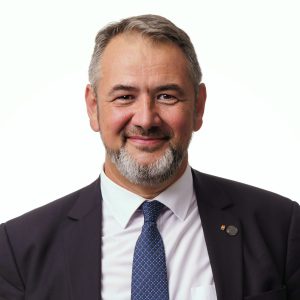
Sorin Costreie, Presidential Adviser for Education and Research in Romania
Abstract: Science in the time of AI and manipulation
We are living in turbulent times, times of disinformation and rapid change, times in which the gaps in our societies are getting deeper. Polycrisis is seems to be the word of the day. Lack of trust in science and truth seems to be the dominant of our times. Yet scientific research is an enterprise based on collaboration and cooperation. Could science bring us together again? How critical thinking and reflexive education could re-unite us? What can we do to infuse solidarity and humanity in our societies?
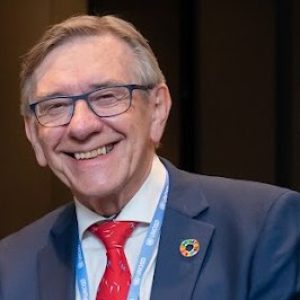
Jan-Gustav Strandenaes, Senior Adviser on Governance
Abstract: Teaching hope or managing disasters?
Three events of global significance took place last year (2025) on the same day addressing a common goal: a better future for the world and its peoples. The three events were based on an identical understanding of the dire and volatile political global situation. Two of the three events entertained a rather dismal way forward: improving the plight of the world had never been this difficult. Their messages echoed what many naysayers of today claim: the old world order based on collaboration, democratic values and respect for rules and laws is gone. The third event acknowledged the formidable global situation facing the world but offered concrete and doable solutions as ways forward. Its message was optimistic and inspired hope.
The day referred to was December the 10th, 2025. That the events took place on the same day, is historically a coincidence. On that day, the Nobel prizes in Physics, Medicine, Chemistry, Economy and Literature were awarded in Stockholm, Sweden, the Nobel Peace prize in Oslo, Norway. On that day, the seventh Global Environment Outlook, the GEO 7 report on the state of the world’s environment was published in Nairobi, Kenya during the seventh UN Environment Assembly, UNEA 7. On that day, administered by the UN Council for Human Rights, in Geneva, Switzerland, the peoples and governments of the world were asked to recognise and celebrate the Universal Human Rights Day.
The three events shared many common traits: The participation of high-level persons; their outstanding knowledge and awareness of global affairs; their shared and outspoken interest in making the world a better place for all. Witnessing these three events, I asked myself questions, the key one being: they share the same understanding of the world; they have access to the same knowledge base – then why do some arrive at a positive conclusion, and others the opposite? Which of the three events presented a true picture of our world of today?
The old liberal world order is gone and replaced by authoritarianism and fear, and we are searching for a new one claim researchers, politicians, decision makers and pundits. Environmental laws are randomly ignored or declared nil and void, the 2020 Agenda on sustainable development with the Sustainable Development Goals are even declared unlawful in countries, human rights and their corollary of rights based laws are ignored, xenophobia has provided fertile ground for the extreme right and education and science are at best ridiculed, at worst rewritten and taken over by narrowminded and prejudiced policies.
But is this generally true? Which order is outdated and gone and if so, what have we lost? Already we see efforts everywhere to fight for what is right for people and planet. People raise up and fight back, dictatorships are challenged and new constellations are formed. The anti-fossil fuel conference in Colombia and the meeting of progressive politicians in Spain in April point a new direction. Despite dramatically reduced finances, the UN is plodding on with its global work on the environment, sustainable development and rights based approaches.
In my presentation I will also explore the recent past and highlight a number of success stories within our work on the environment, sustainable development and rights based approaches and emphasise the need to bring perspectives into what we are thinking about. I will challenge the postulation that the old world order is gone and show how our world depends on the best of the past. Without perspectives, we cannot see or gauge progress. Change is made by people who refuse to forget. I will also claim that hope arises from history – despair arises from forgetting. Despair and pessimism makes everybody more pliant. Solidarity and sense of purpose and interconnections are meaningful.
Living and expanding knowledge inspires optimism and is the best antidote to lethargy.
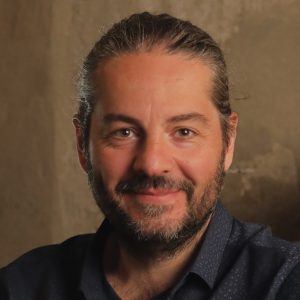
Dobrivoje Lale Eric, leader of the Department of International Cooperation at Serbia’s Center for the Promotion of Science (CPN)
Abstract: Creating Knowledge at the Verge of Art and Science
Despite all social, political and technological pressures, shifts and tensions we’re experiencing as the global community, the learning stays in the centre of human interest, providing countless, unparalleled opportunities for creating, exchanging and improving knowledge. Through a diverse range of practices and approaches, the learning process allows humans to cross times, spaces and realms, to bridge gaps, borders and differences, and to establish connections between our species, all other parts of nature and non-living world. It functioned that way long in the past, and it works today as well, though it has been accelerating lately in an unprecedented manner.
Still, learning shouldn’t be seen as a linear, top-down method for dispersing knowledge. Rather, as open communication mechanism, it should navigate research and discussions by providing meaningful settings for examining and questioning our existence, our presence and our aims – the purpose of our life and what we want to be(come) and achieve in such a complex environment.
Among numerous traditions and methodologies, one deserves a special attention as it usually stays outside mainstream trends and frameworks. It is a (relatively) novel model with potentials to open up, solve, or at least address some of major concerns the humanity faces nowadays. In this system, the boundless manifestations of arts are invited to collide with those coming from structured and rigid realm of contemporary science, with a goal to produce unique experiences by common perception of (seemingly) opposed disciplines.
One of these attempts was initiated in Belgrade in 2014. The art+science programme, except being a physical and conceptual space that allows unobstructed communication between artists and scientists, possesses other qualities and values as well. The most intriguing one brings opportunities to investigate, represent or recreate critical realities and themes of our time, like climate crisis, biodiversity loss, human – tech dynamics including the impact of emerging technologies on individuals, to name just a few.
As a founder and professional who conceived and conceptualised the art+science programme, Dobrivoje Lale Erić was involved in major European and global initiatives and collaborations, which were paving the way for transdisciplinary collaborations by piloting diverse approaches and testing potentials. For the last decade+, together with the team behind the programme, he was dealing with such complex, distant and challenging topics like neurodegenerative diseases, water pollution, digital religion, emotional manipulations…
The talk at the Living Knowledge 2026 in Gdansk will showcase the genesis of the art+science as a unique programme able to connect creative minds coming out from diverse practices of art and science. It will emphasise and argument the need for much more open and equally more structured transdisciplinary connections as mediums for addressing challenges we’re struggling with as humans, already deeply engaged in the 21st century.
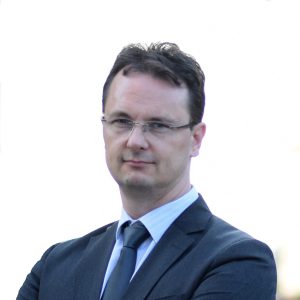
Srdjan Verbic, Professor data science and statistics in Belgrade
Abstract: Lessons We Never Learn
What did we learn from COVID-19 except not to panic about toilet paper? The crisis spontaneously enabled so many learning outcomes in all aspects of life, but we cannot be sure if we have learned any critical lessons related to public health, policy, or societal behavior.
One-off learning opportunity appears to be very different from statistical learning, the approach we use for recurring events. With seasonal flu, for instance, we get annual rehearsals. We test interventions, see patterns, and refine our response. With a pandemic, it is hard to measure and control relevant variables when it is too late to design the experiment, so we get one chaotic performance with no chance to run the show again.
Main topic of this talk is our failure to learn from rare and unexpected, but impactful events. Such events have many examples in recent history, including pandemics, natural disasters, terroristic attacks and financial crises. These events concern the entire society in which different interest groups do not necessarily share the same values and priorities. In such environment, evaluation of all actions taken in response to the crisis become more political than scientific. Above all, complex relationships between different stakeholders create fertile ground for numerous conspiracy theories that will further hinder our ability to solve the crisis efficiently and learn from this difficult experience.
This talk will explore the reasons behind our failure to learn from rare events and discuss some strategies to improve our learning process. We will examine the role of cognitive biases in shaping our perceptions and decision-making during crises. Additionally, we will discuss the importance of long-term planning and resilience to prepare ourselves better for future challenges.
The key question about learning from rare events is what would happen if similar events happened again? Will we be smarter, or will we repeat the same mistakes? To answer this question, we will discuss the importance of creating a culture of learning and continuous improvement, where we can openly acknowledge our mistakes and learn from them.